
Commercial Roof Inspection in San Antonio: What We Found Beneath the Surface
By David Villarreal, Rhino Roofers · September 23, 2026 · Updated September 23, 2026
By David Villarreal, Rhino Roofers | Featuring insights from Anthony Beard, Commercial Manager, with 13 years of commercial roofing experience
About the Expert
Anthony Beard brings 13 years of commercial roofing experience to the field. As Commercial Manager at Rhino Roofers, he works directly with property owners, property managers, and facility teams across San Antonio, Austin, and the Central Texas corridor to evaluate commercial roof conditions and develop practical repair, restoration, and replacement solutions.
When a Commercial Building Develops Recurring Leaks
When a commercial building develops recurring roof leaks, determining whether to repair, restore, or replace the roof requires looking past the surface.
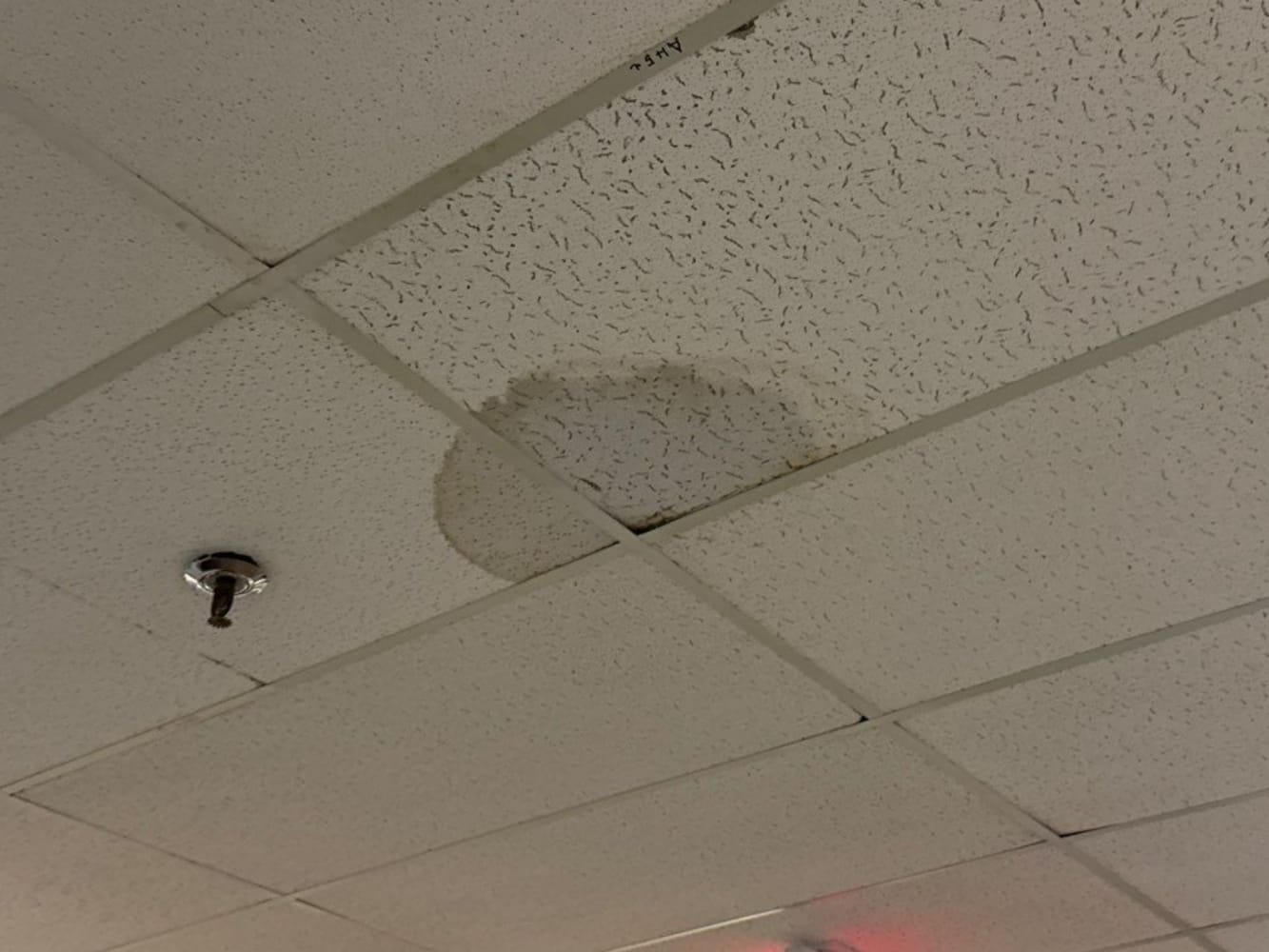
Interior water staining documented during a commercial roof inspection in San Antonio.
A thorough commercial roof inspection must link evidence of interior leaks to the physical condition of the roof membrane, drainage pathways, equipment details, and underlying assembly layers.
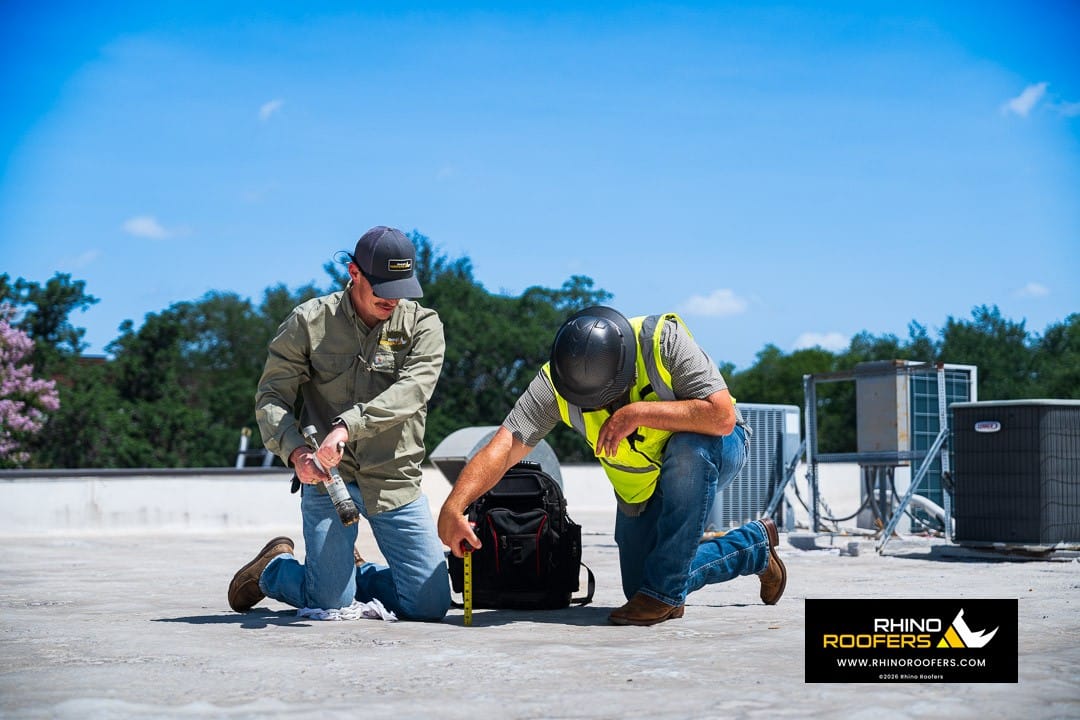
As Anthony Beard explained during a recent inspection in San Antonio:
"Even though we come out here and we do inspections, it's an investigation at the end of the day."
That distinction is critical. A basic walk-through notes visible exterior wear, but a commercial roof investigation determines why water is entering, how moisture moves through the assembly, and which solutions comply with local building standards.
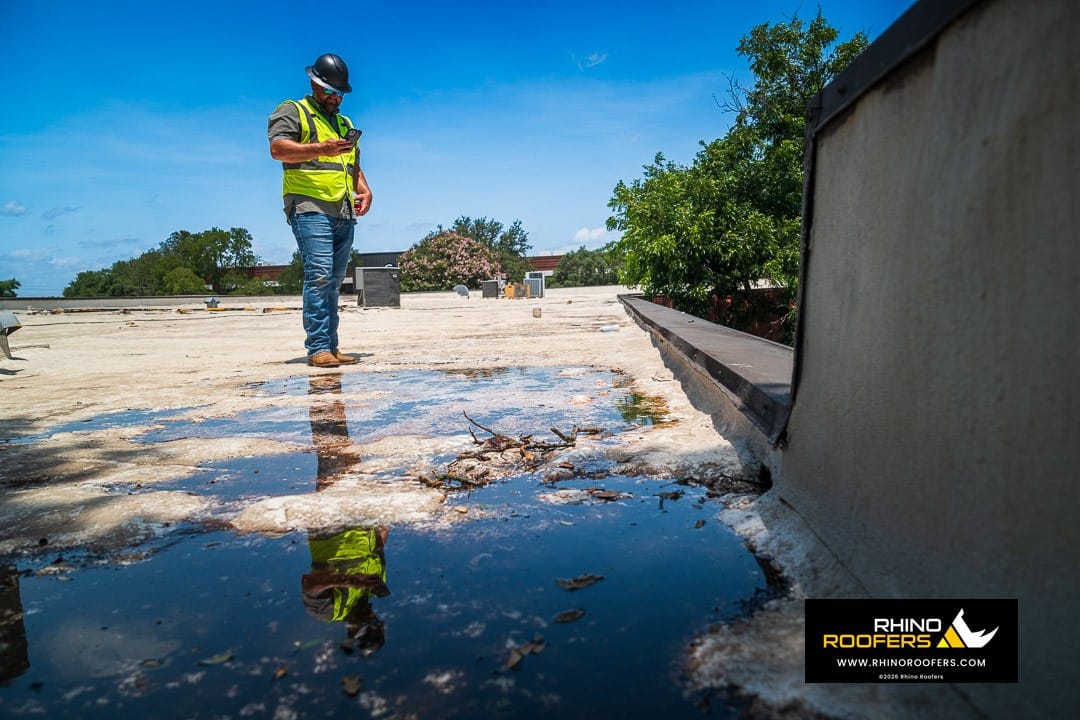
Standing water and debris documented during a commercial roof inspection in San Antonio, highlighting why drainage is a critical part of evaluating a low-slope roof.
What Does a Commercial Roof Inspection Include?
A commercial roof inspection includes a systematic review of the building interior, roof membrane, drainage structures, equipment penetrations, and subsurface material layers.
Depending on the building's history, active symptoms, and overall project scope, a comprehensive commercial roof inspection examines:
- Active leaks, ceiling stains, and interior wall moisture
- Surface membrane or coating conditions
- Existing roof layers and material composition
- Drainage efficiency, scupper heights, and ponding areas
- Penetrations, conduit transitions, and sealant integrity
- Rooftop HVAC equipment supports, sleepers, and lines
- Subsurface core samples to verify insulation and moisture status
- Conditions that affect repair, coating restoration, recover, or replacement options
On this San Antonio property, the customer reported recurring leaks across multiple interior areas. Several ceiling tiles were water-damaged, and active moisture was visible along an interior wall.
The existing roof assembly was 15 to 20 years old and consisted of a spray polyurethane foam (SPF) system with a silicone coating applied over an older built-up gravel roof (BUR). Evaluating the property required analyzing how water interacted with both systems.
Why Should the Inspection Include the Interior?
When a commercial building has active or recurring leaks, the inspection should include the interior because leak locations provide critical context for understanding how water may be traveling through the roof assembly.
Roof leaks rarely drip directly below the point of exterior entry. Water routinely migrates along roof decks, through insulation joints, around fasteners, or between separate roof applications before entering the interior space.
During this investigation, Anthony examined interior ceiling damage and matched its position to a specific conduit penetration on the roof. Connecting interior evidence with rooftop conditions narrows down potential entry points and prevents surface-only repairs that leave active leaks unresolved.
Why Are Commercial Roof Core Samples Important?
Commercial roof core samples are important because they reveal the roof assembly at specific locations, including existing layers, insulation thickness and type, deck material, and evidence of trapped moisture.
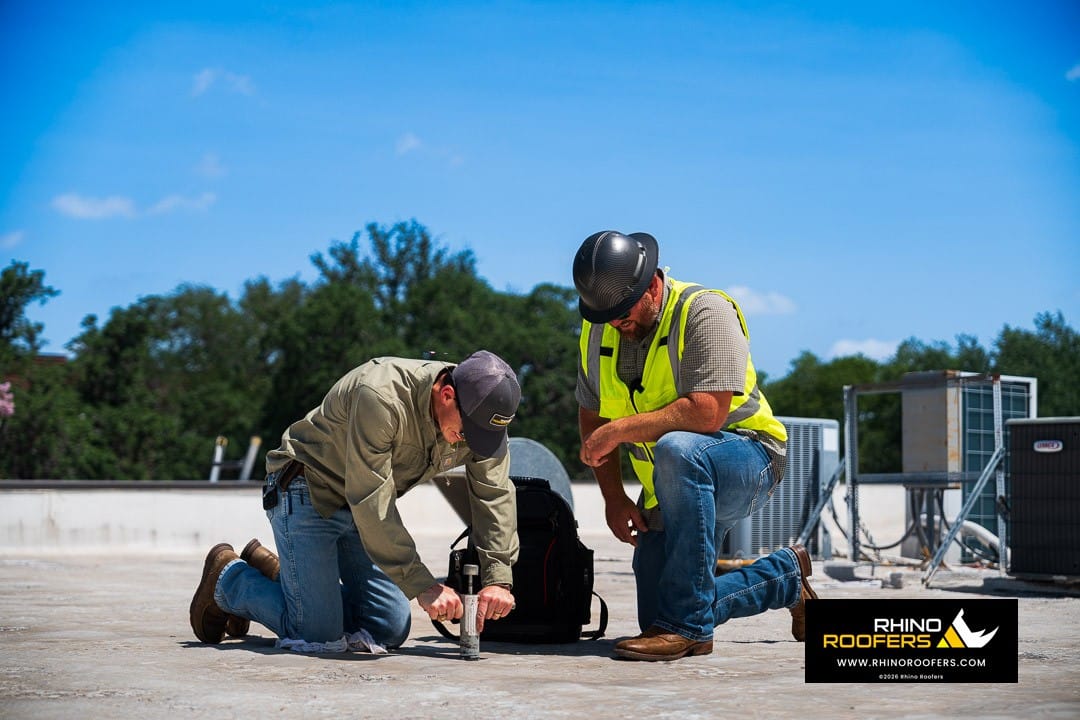
A roof core sample reveals what is beneath the surface, helping identify existing roof layers, insulation, deck material, and signs of trapped moisture.
As Anthony noted while examining the assembly:
"If you don't core it, you don't really know what you're getting into."
He added regarding comprehensive diagnostic evaluations:
"And that's why we core every single roof we go out to."
While minor, targeted leak repairs on single-layer roofs may not always demand a core sample, thorough commercial roof inspections for aging or complex properties require them.
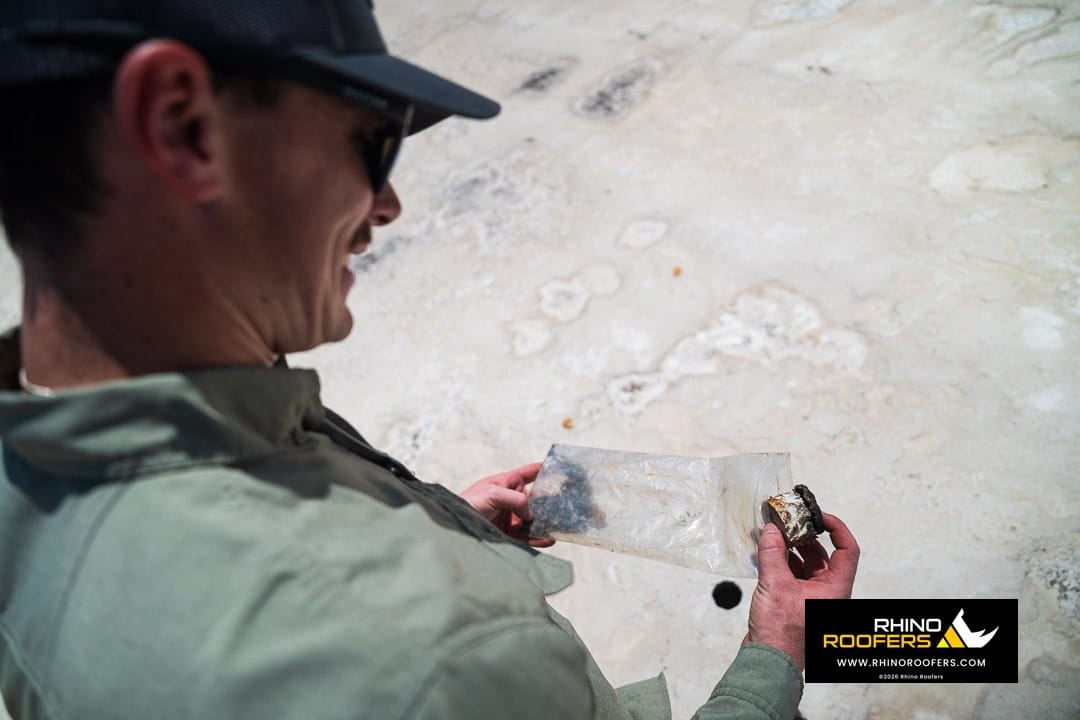
The roof core revealed multiple existing systems, including a silicone topcoat, spray foam insulation, an older built-up roof, fiberboard, and the metal deck below. The fiberboard also showed evidence of trapped moisture.
Comparing cores from high and low areas can also help determine whether slope is created structurally or with tapered insulation.
Core samples are also necessary to verify code compliance. San Antonio and Austin currently use the 2024 International Building Code, subject to local amendments. IBC reroofing provisions restrict roof recover where an existing roof is water-soaked or deteriorated beyond use as a suitable base, or where two or more applications of roof covering already exist.
What Did the Drainage Inspection Reveal?
The drainage evaluation revealed that while the roof structure maintained adequate slope, previous roofing work had altered the scupper heights, restricting water flow off the roof edge.
A scupper is an outlet cut through a parapet wall or roof edge that allows water to drain into a conductor head or downspout.
On this roof, previous application of the spray foam system raised the base elevation of the scuppers relative to the roof deck, creating a lip that trapped water along the back wall. Debris had also accumulated in the openings.
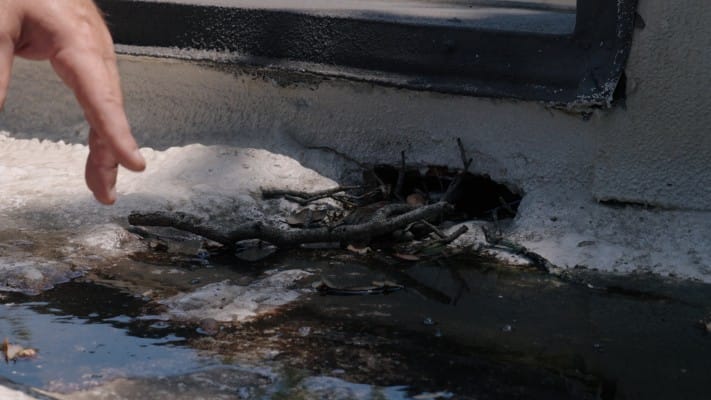
Debris inside this scupper was restricting drainage and contributing to water remaining on the commercial roof.
Reviewing the scupper installation, Anthony observed:
"Simple fix."
He noted that the scuppers should have been set at the correct finished deck elevation before completing the previous roof application so water could drain freely.
According to guidance from the National Roofing Contractors Association (NRCA), positive roof drainage requires that water discharge from the roof within 48 hours following precipitation under drying conditions.
Raised scuppers, debris, or other restrictions can interfere with positive drainage and allow water to remain on the roof. Read more on why proper roof drainage prevents leaks and water damage.
Why Do Penetrations and Conduit Matter?
Penetrations and conduit transitions matter because every pipe, line set, or structural support penetrating a commercial roof membrane creates a detail that must be properly flashed, sealed, and maintained over time.
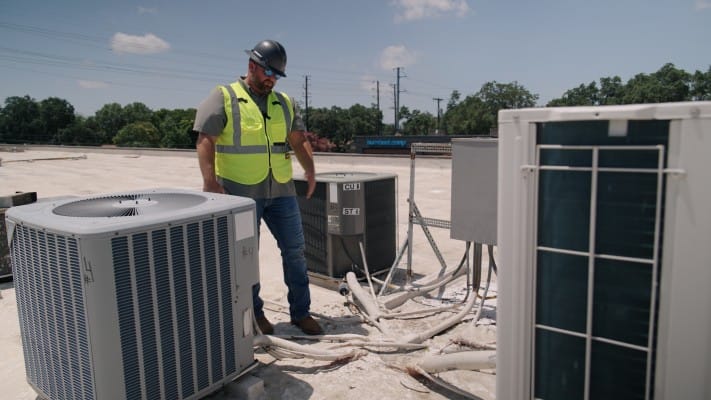
Roof penetrations and conduit are critical inspection points because gaps, failed sealants, and improper detailing can create pathways for water intrusion.
Penetrations can fail due to:
- Degraded or missing sealants
- Differential thermal movement between materials
- Incomplete detailing during prior installations
- Trade traffic during regular equipment service
- Vegetation growth left unaddressed
On this roof, Anthony identified a wide gap at a central conduit penetration where moisture was actively present.
Nearby, vegetation had taken root directly in the spray foam material. As roots extended through the outer coating, they created direct pathways for water to bypass the surface membrane.
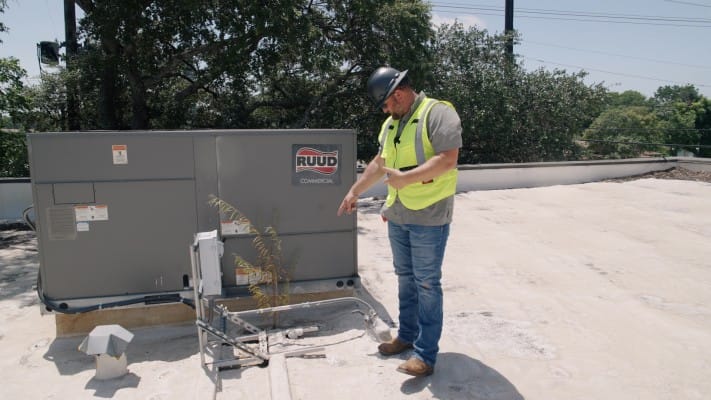
Vegetation growing from the spray foam near a rooftop unit and conduit, one of the pathways that let water bypass the surface membrane.
For more on these details, see why you should check your flashing and roof penetrations for leaks.
How Do Rooftop HVAC Units Affect a Roof Replacement?
Rooftop HVAC equipment affects a roof replacement because changing finished roof heights or replacing underlying structural sleepers requires trade coordination, potential equipment disconnects, and warranty considerations.
A sleeper is a heavy support structure positioned under rooftop equipment or piping.
On this property, spray foam had been applied around existing sleepers and conduit clusters. Replacing or restoring the roof requires evaluating:
- Whether existing equipment sleepers can be safely removed or modified
- If HVAC contractors must raise, disconnect, or re-pipe units
- Whether mechanical equipment warranties require certified HVAC technicians on-site
- How new flashings will detail around high-density conduit penetrations
Failure to audit mechanical details during the initial evaluation creates unexpected change orders during construction.
As Anthony summarized:
"If you don't come up here, you don't do the proper investigation, you'll miss stuff like this, and it'll cost you in the long run."
What Does Trapped Moisture Look Like?
Trapped moisture in a multi-layer commercial roof often manifests as visible surface blistering, soft or spongy areas underfoot, and water escaping when pressure is applied to the membrane.
During the inspection, stepping on a raised blister released trapped liquid from beneath the silicone coating. Stepping on adjacent sections demonstrated significant fluid movement between the system layers.
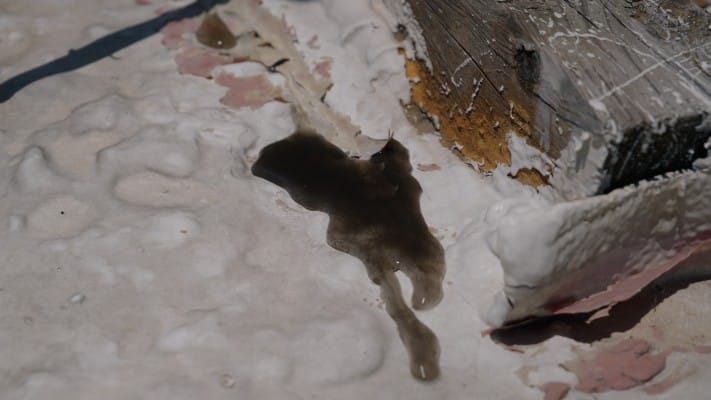
Water discharging from a roof blister revealed trapped moisture beneath the surface of the existing commercial roof system.
As Anthony observed during the walk-through:
"There's just a ton of moisture trapped underneath here."
Describing the movement of the saturated layer beneath the surface, he added:
"It's like a water bed. Literally."
On this roof, moisture had become trapped between the existing systems. Anthony observed water moving beneath the surface and explained that trapped water can travel through the assembly before eventually finding an interior pathway.
That helps explain why the customer was experiencing leaks in different areas of the building.
Does This Mean Spray Foam or Silicone Caused the Problem?
No single product or material should be identified as the sole cause of failure without evaluating the design, installation history, and maintenance of the complete assembly.
The evaluation of this property revealed multiple contributing factors:
- An assembly containing multiple existing roof systems
- Water trapped between historical layers
- Raised scupper heights that impeded positive drainage
- Unsealed conduit gaps and root intrusion
- Surface blistering and lateral subsurface water movement
Applying a new roofing system over wet or unsuitable existing materials, or failing to properly address drainage and penetration details, can compromise the performance of the finished system.
For roofs that do qualify for restoration, Anthony walks through when a coating is the right call in this video. For the full breakdown, read Commercial Roof Coatings: Can Your Roof Be Restored Instead of Replaced?
What Should Property Managers Expect From a Commercial Roof Inspection?
A commercial roof inspection should provide building owners and facility managers with a clear, evidence-based assessment of the roof system's condition and project constraints rather than a quick surface quote.
A thorough commercial roof inspection provides clear findings on:
- Likely primary points of exterior water intrusion
- Subsurface moisture conditions and lateral migration pathways
- Total layer counts and underlying material types
- Drainage performance and scupper or drain elevation accuracy
- Mechanical equipment clearance and penetration detailing
- Code compliance requirements for recover versus full tear-off
- Feasible repair, restoration, or replacement scopes
Recommendations should reflect the physical evidence gathered during both interior and exterior investigations.
Frequently Asked Questions About Commercial Roof Inspections
What Is a Commercial Roof Inspection?
A commercial roof inspection is a comprehensive evaluation of a building's exterior membrane, interior leak indicators, drainage systems, rooftop equipment, and subsurface materials to assess current performance and future service options.
What Does a Roof Core Sample Reveal?
A roof core sample reveals the physical composition of the roof assembly at a specific location, including the number of existing roof layers, insulation type and thickness, deck material, and whether moisture is trapped beneath the surface membrane.
This roof core sample revealed multiple existing roofing layers, including silicone coating, spray foam, built-up roofing, fiberboard, and the metal deck below.
What Is the Building Code Limit for Commercial Roof Layers?
Under the International Building Code provisions adopted in San Antonio and Austin, a roof recover cannot be installed over an existing roof that already has two or more applications of roof covering, or over an existing system that is wet or structurally deteriorated.
What Is Considered Ponding Water on a Commercial Roof?
According to the National Roofing Contractors Association, ponding water is water that remains on a low-slope roof deck 48 hours after precipitation under conditions conducive to drying.
Positive drainage requires that water discharge within this window.
Can a Commercial Roof Leak Appear Far From Where Water Enters?
Yes. In multi-layer assemblies or sloped decks, water can enter through a penetration and travel horizontally through insulation or between roofing layers before dropping into the building interior far from the exterior entry point.
How Do Rooftop HVAC Units Impact Commercial Roofing Costs?
Rooftop units impact project scope because changes in roof height or insulation thickness may require raising equipment, replacing support sleepers, re-routing conduit, or hiring mechanical subcontractors to maintain equipment warranties.
Verifiable Evidence Over Assumptions
Surface appearances on a commercial roof rarely tell the full story.
On this San Antonio property, identifying the source of recurring leaks required connecting interior evidence with physical core samples, scupper height evaluations, mechanical sleeper reviews, and subsurface moisture findings.
Whether managing commercial assets in San Antonio, Austin, or across Central Texas, property owners benefit from commercial roof inspections that prioritize long-term assembly health over quick fixes.
Rhino Roofers provides commercial roof inspections, core sampling, and system assessments for property managers, facility directors, and building owners throughout San Antonio, Austin, and Central Texas.
Schedule your free commercial roof inspection — Rhino Roofers. We build tough roofs.
Technical References and Standards
- National Roofing Contractors Association (NRCA) Glossary of Roofing Terms: Positive Drainage and Ponding Water Benchmarks
- International Code Council (ICC) 2024 International Building Code, Chapter 15: Roof Assemblies and Reroofing Restrictions
- City of San Antonio Development Services 2024 Building-Related Codes Adoption and Local Amendments Effective May 1, 2025
- City of Austin Development Services 2024 Building Technical Codes and Fire Criteria Manual Effective July 10, 2025