
Standing Seam Metal Roof Versus Stone-Coated Steel: Which Is Better for Your Home?
Metal Roofing
By David Villarreal, Rhino Roofers
Metal roofing has become a popular choice for homeowners who want a roof that is durable, attractive, energy efficient, and built to handle tough weather. But once you decide that metal roofing may be right for your home, there is another important question to answer: should you choose a standing seam metal roof or a stone-coated steel roof?
Both options offer long-term performance, strong weather resistance, and a more premium look than standard asphalt shingles. However, they are not the same. Standing seam metal roofing has a sleek, modern appearance with raised vertical seams, while stone-coated steel is designed to look more like traditional shingles, shake, or tile while still using a steel base.
Understanding the difference can help you choose the right roofing system for your home, your budget, and the style of your property.
Table of Contents
What Is a Standing Seam Metal Roof?
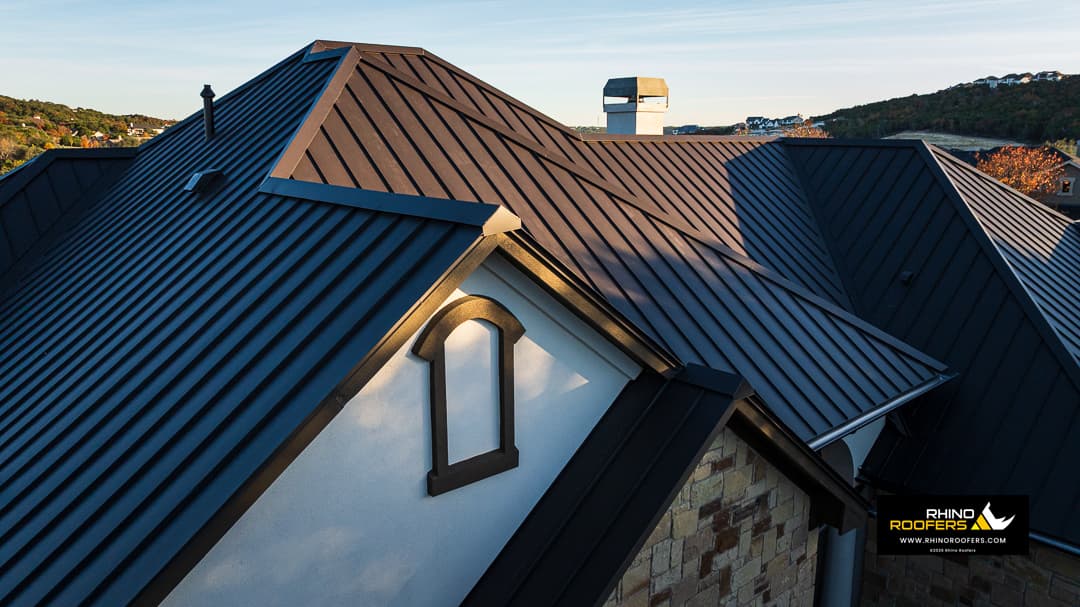
A standing seam metal roof is a roofing system made from long metal panels that run vertically from the ridge of the roof down to the eaves. The panels connect with raised seams, which are usually fastened in a way that hides the screws or clips beneath the surface.
This hidden-fastener design is one of the biggest advantages of standing seam roofing. Because the fasteners are not exposed directly to rain, wind, and sunlight, there are fewer weak points where water can enter over time. This makes standing seam metal roofing one of the most durable and weather-resistant metal roofing systems available.
Standing seam roofs are often chosen for homes with a modern, farmhouse, contemporary, or high-end architectural style. They create clean lines and a simple, polished look that stands out from traditional roofing materials.
What Is a Stone-Coated Steel Roof?
Stone-coated steel roofing is also a metal roofing system, but it has a very different look and feel. Instead of long vertical panels, stone-coated steel is usually manufactured in smaller panels that are shaped to resemble shingles, wood shake, barrel tile, or slate.
The steel panel is coated with a layer of stone granules, which gives the roof texture, color, and a more traditional appearance. This makes stone-coated steel a popular choice for homeowners who want the strength of metal but do not want the bold, modern look of a standing seam roof.
Stone-coated steel can be especially appealing for homes in neighborhoods where architectural style matters. It can provide the appearance of tile or shake without the same weight, maintenance, or breakage concerns that come with some traditional materials.
Appearance and Curb Appeal
The most obvious difference between standing seam metal roofing and stone-coated steel is appearance.
Standing seam has a clean, smooth, vertical profile. It gives the home a sharp, modern appearance and works especially well on contemporary homes, Hill Country homes, farmhouses, and properties with simple rooflines. It is also available in a wide range of colors, allowing homeowners to choose a subtle neutral tone or a more dramatic finish.
Stone-coated steel offers a more traditional look. Depending on the profile, it can resemble asphalt shingles, clay tile, wood shake, or slate. This makes it easier to match existing neighborhood styles or preserve a classic home appearance while still upgrading to a stronger roofing material.
If you want your roof to make a modern design statement, standing seam may be the better choice. If you want metal performance without making the home look like it has a metal roof, stone-coated steel may be the better fit.
Durability and Weather Performance
Both standing seam metal roofs and stone-coated steel roofs are built for durability. They are designed to resist many of the issues that can shorten the life of traditional roofing materials, including cracking, curling, rot, and insect damage.
Standing seam roofing performs especially well in heavy rain because the raised seams help direct water off the roof. The hidden fastener system also reduces the number of exposed penetration points. This can be a major advantage during strong storms, especially when the roof is installed correctly by an experienced roofing contractor.
Stone-coated steel also performs well in harsh weather. The steel base gives it strength, while the textured surface can help reduce glare and provide a more dimensional appearance. Many stone-coated steel systems are also designed to handle wind, hail, and impact better than standard asphalt shingles.
For Central Texas homeowners, both systems can be strong options because the region experiences intense sun, heavy rain, high winds, hail, and sudden storm activity. The right choice often comes down to the roof design, the home’s style, and the specific product being installed.
Maintenance and Long-Term Care
One of the reasons homeowners consider metal roofing is reduced maintenance. While no roof is completely maintenance-free, both standing seam and stone-coated steel typically require less ongoing care than many traditional roofing materials.
Standing seam roofs are relatively simple to maintain because of their smooth surface. Debris is less likely to collect on the panels, and the roof’s vertical lines help shed water efficiently. Routine inspections are still important, especially after major storms, but the system is designed to limit common failure points.
Stone-coated steel roofs may require slightly different maintenance because of their textured surface. Leaves, branches, and debris can occasionally collect in certain areas depending on the roof slope and panel profile. Homeowners should also avoid walking on the roof unnecessarily, since improper foot traffic can damage panels or loosen granules.
With either system, regular roof inspections are important. A professional roofer can check flashing, vents, fasteners, sealants, valleys, penetrations, and storm-related damage before small problems become expensive repairs.
Energy Efficiency
Metal roofing is often valued for its energy efficiency. Many metal roof systems reflect more sunlight than traditional dark asphalt shingles, which can help reduce heat absorption during hot Texas summers.
Standing seam metal roofs are especially known for reflective finishes. When paired with the right color, coating, ventilation, and attic insulation, they can help improve overall home comfort and reduce the strain on the HVAC system.
Stone-coated steel can also contribute to energy efficiency, although performance depends on the product, color, coating, installation method, and roof assembly. Some stone-coated steel systems are installed with an air space between the roof deck and the panels, which may help reduce heat transfer into the attic.
It is important to remember that the roof material is only one part of the energy-efficiency equation. Proper attic ventilation, insulation, and installation quality all play major roles in how well the roofing system performs.
Cost Considerations
Both standing seam and stone-coated steel are premium roofing options. They usually cost more upfront than standard asphalt shingles, but many homeowners choose them because of their durability, appearance, and potential long-term value.
Standing seam metal roofing is often one of the more expensive metal roof systems because it requires specialized materials, careful fabrication, and experienced installation. The hidden fastener system, panel design, roof slope, roof complexity, and metal type can all affect the final price.
Stone-coated steel can also be a premium investment, especially if the homeowner chooses a profile that mimics high-end tile, shake, or slate. The cost may vary based on the product style, panel quality, underlayment, roof layout, and installation requirements.
When comparing cost, homeowners should look beyond the initial price. A lower-cost roof that needs more repairs or replacement sooner may not be the better value. A higher-quality metal roof may cost more upfront but can offer better long-term performance when properly installed and maintained.
Which Roof Is Better for Your Home?
There is no single answer that applies to every home. Standing seam metal roofing and stone-coated steel roofing are both strong systems, but they serve different needs.
A standing seam metal roof may be the better choice if you want a sleek, modern look, excellent water-shedding performance, hidden fasteners, and a clean architectural profile. It is a strong option for homeowners who like a bold metal roof appearance and want one of the most durable metal systems available.
A stone-coated steel roof may be the better choice if you want the strength of metal but prefer the look of shingles, shake, tile, or slate. It can be a great option for homeowners who want upgraded durability without changing the traditional appearance of the home.
The best way to decide is to have a roofing professional inspect your home, review your roof slope and structure, discuss your style preferences, and explain which systems are best suited for your property. Roof design, budget, neighborhood style, storm exposure, and long-term goals should all be considered before making a final decision.
For homeowners in Central Texas, both options can provide a major upgrade over traditional roofing materials. The key is choosing the right system and having it installed by a contractor who understands local weather conditions, proper ventilation, flashing details, and manufacturer installation standards.
Frequently Asked Questions
Is a standing seam metal roof worth it?
A standing seam metal roof can be worth it for homeowners who want long-term durability, strong weather resistance, and a clean, modern appearance. It typically costs more than asphalt shingles, but it may offer better long-term value when properly installed.
Is stone-coated steel roofing worth it?
Stone-coated steel roofing can be a strong choice for homeowners who want the durability of metal with a more traditional look. It is especially appealing for homes where the owner wants the appearance of shake, tile, slate, or shingles without using those exact materials.
Which lasts longer: standing seam or stone-coated steel?
Both roofing systems can last for many years when installed correctly and maintained properly. The actual lifespan depends on the product, installation quality, local weather exposure, ventilation, maintenance, and manufacturer specifications.
Are standing seam and stone-coated steel roofs good for hail?
Both systems can offer strong impact resistance compared to many traditional roofing materials, but hail performance depends on the specific product and severity of the storm. After any significant hail event, it is still smart to schedule a professional roof inspection.
Are metal roofs noisy when it rains?
A properly installed metal roof over solid decking, underlayment, insulation, and attic space is usually not as noisy as many homeowners expect. Installation quality and the overall roof assembly play a major role in sound control.
How do I know which metal roof is best for my home?
The best choice depends on your home’s design, roof slope, budget, style preferences, and long-term goals. A professional roofing inspection can help determine whether standing seam metal roofing or stone-coated steel is the better fit for your property.