
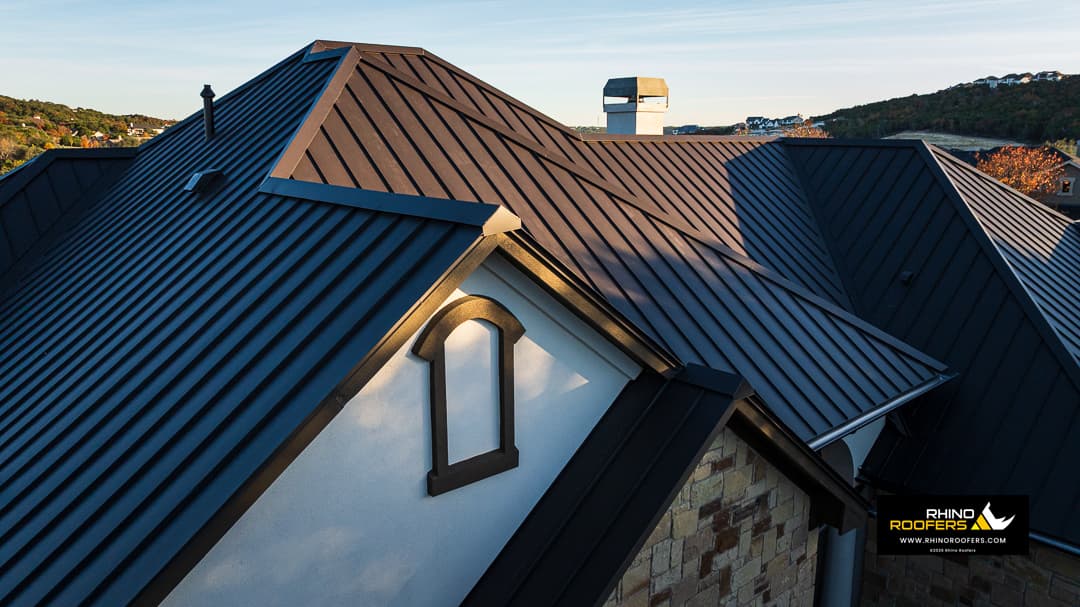
Standing Seam Metal Roof Cost: What Homeowners Should Know
Metal Roofing
By David Villarreal, Rhino Roofers
Standing seam metal roofing is one of the most durable and attractive roofing options available for homeowners who want long-term performance. It has a clean vertical profile, a hidden-fastener design, and a modern look that works well on many homes throughout San Antonio, Austin, and Central Texas.
Because standing seam is a premium roofing system, it usually costs more upfront than asphalt shingles or some exposed-fastener metal roofing systems. The final cost depends on several factors, including roof size, roof complexity, metal type, panel design, underlayment, trim, flashing, labor, and installation requirements.
If you are considering a standing seam metal roof, it helps to understand what affects the price and why this type of roof is often viewed as a long-term investment.
Table of Contents
Why Standing Seam Metal Roofing Costs More
A standing seam metal roof is typically more expensive than a standard asphalt shingle roof because it is a more specialized roofing system. The panels are designed to run vertically along the roof, with raised seams that lock together and protect the fasteners from direct weather exposure.
This design requires precision. The panels, seams, clips, flashing, and trim all need to be installed correctly for the system to perform as intended. Standing seam roofing also often requires specialized tools, experienced installers, and careful attention to roof details.
The higher upfront cost reflects the material quality, installation complexity, and long-term performance potential. For homeowners looking for a roof with a sleek appearance, strong weather resistance, and a longer service life, standing seam metal roofing can be a worthwhile option to consider.
Roof Size and Roof Complexity
Roof size is one of the biggest factors in standing seam metal roof cost. Larger roofs require more panels, more clips, more underlayment, more trim, and more labor. However, the size of the home is not always the same as the size of the roof.
A home with wide overhangs, a large garage, covered patios, or multiple roof sections may have more roof surface than expected. Roofers measure the roof itself, not just the square footage of the living area.
Complexity also matters. A simple roof with long, clean slopes is usually easier to install than a roof with multiple valleys, dormers, skylights, chimneys, hips, ridges, and changes in elevation. Every transition point requires careful cutting, flashing, and sealing. The more complex the roofline, the more time and material the project may require.
Panel Type, Gauge, and Finish
Not all standing seam metal roofs are the same. The panel type, metal gauge, metal type, and finish can all affect the final cost. Some panels are designed for specific roof slopes, architectural styles, or performance needs.
Gauge refers to the thickness of the metal. Thicker panels may cost more, but they can offer added strength and durability depending on the application. The type of metal also matters. Steel, aluminum, copper, and other metals each have different price points, performance characteristics, and appearance options.
The finish or coating can also influence cost. High-quality painted finishes are designed to resist fading, chalking, corrosion, and weather exposure. Since Central Texas roofs face intense sun, heat, rain, wind, and hail, the finish should be selected with long-term performance in mind.
Tear-Off, Decking, and Underlayment
The condition of the existing roof can affect the total project cost. In many cases, the old roofing material must be removed before the new standing seam metal roof is installed. This tear-off process includes labor, disposal, cleanup, and inspection of the roof deck.
Once the old material is removed, the decking can be evaluated. If the decking is soft, rotted, warped, or damaged from previous leaks, it may need to be repaired or replaced before installation. A standing seam metal roof needs a solid, properly prepared surface beneath it.
Underlayment is another important part of the system. A high-quality underlayment helps protect the roof deck and provides an added layer of defense beneath the panels. The type of underlayment used can vary based on roof design, manufacturer requirements, and local conditions.
Flashing, Trim, Valleys, and Roof Details
Standing seam metal roofing requires careful attention to detail around roof transitions. Flashing, trim, valleys, ridges, hips, eaves, rakes, walls, chimneys, skylights, and pipe penetrations all need to be handled correctly.
These details can affect both the cost and the performance of the roof. A roof with many transitions usually takes more time to install because each area must be cut, fitted, and sealed properly. Poorly installed flashing or trim can create leak points, even if the main roof panels are high quality.
Because standing seam systems are designed to expand and contract with temperature changes, the installation must allow the panels to move correctly. This makes experienced installation especially important in areas like San Antonio and Austin, where roofs are exposed to significant heat and weather changes.
Long-Term Value vs. Upfront Cost
Standing seam metal roofing costs more upfront, but many homeowners consider it because of the long-term value. A properly installed metal roof can offer strong durability, excellent weather resistance, and a distinctive appearance that can improve curb appeal.
Metal roofing can also be energy efficient when paired with the right color, finish, ventilation, and attic insulation. Reflective finishes may help reduce heat absorption, which can be useful during hot Central Texas summers.
For homeowners comparing options, it is helpful to think beyond the initial installation price. A lower-cost roof that needs more frequent repairs or earlier replacement may not provide the same value over time. Standing seam may be a better fit for homeowners who plan to stay in the home, want a premium roof system, or prefer a modern architectural look.
When to Schedule a Metal Roof Estimate
If you are considering standing seam metal roofing, the best next step is to schedule a professional estimate. A roofer can inspect the existing roof, measure the roof surface, evaluate roof complexity, check decking concerns, review ventilation, and explain which metal roof options may fit your home.
An estimate can also help you compare standing seam with other roofing options, including asphalt shingles, tile, and stone-coated steel roofing. If your current roof has storm damage or recurring leaks, the inspection can also help determine whether a targeted roof repair is enough or whether a full roof replacement makes more sense.
Rhino Roofers installs metal roofing for homeowners who want a durable, attractive roofing system built for Central Texas weather. If you are comparing standing seam metal roof cost, a trusted San Antonio and Austin roofing company can help you understand your options clearly.
Frequently Asked Questions
Why does standing seam metal roofing cost more?
Standing seam metal roofing usually costs more because it uses premium materials, hidden fasteners, specialized panels, detailed flashing, and experienced installation. It is a more complex system than standard asphalt shingles or exposed-fastener metal roofing.
Is a standing seam metal roof worth the cost?
It can be worth it for homeowners who want long-term durability, strong weather resistance, energy efficiency, and a clean modern appearance. The value depends on your budget, home style, roof design, and long-term plans.
What factors affect standing seam metal roof cost?
Major cost factors include roof size, roof complexity, panel type, metal gauge, finish, tear-off needs, decking condition, underlayment, flashing, trim, labor, and installation requirements.
Does standing seam cost more than asphalt shingles?
Yes, standing seam metal roofing usually costs more upfront than asphalt shingles. However, it may offer better long-term value for homeowners who want a premium, durable roofing system.
Is standing seam metal roofing good for hail-prone areas?
Standing seam metal roofing can be a strong option in hail-prone areas, but it may still dent depending on hail size, metal type, panel thickness, and storm severity. After a major hailstorm, the roof should be inspected for dents, coating damage, flashing issues, and other concerns.
How do I get an accurate standing seam metal roof estimate?
The best way to get an accurate estimate is to schedule a professional roof inspection. A roofer can measure the roof, evaluate complexity, check decking and ventilation, and explain which standing seam options fit your home.